Score base diffusion models
2025年9月12日
14:44
参考视频 :https://www.youtube.com/watch?v=lUljxdkolK8
从另一个角度,另一种数学框架,来看扩散过程。
随机可微方程SDE:dx=f(x,t)dt + g(t)dW,其中f(x,t)是确定的,被称为drift,即漂流的大方向。而dW是不确定的,随机的抖动,g(t)表示抖动的强度,被称为diffusion coefficients。
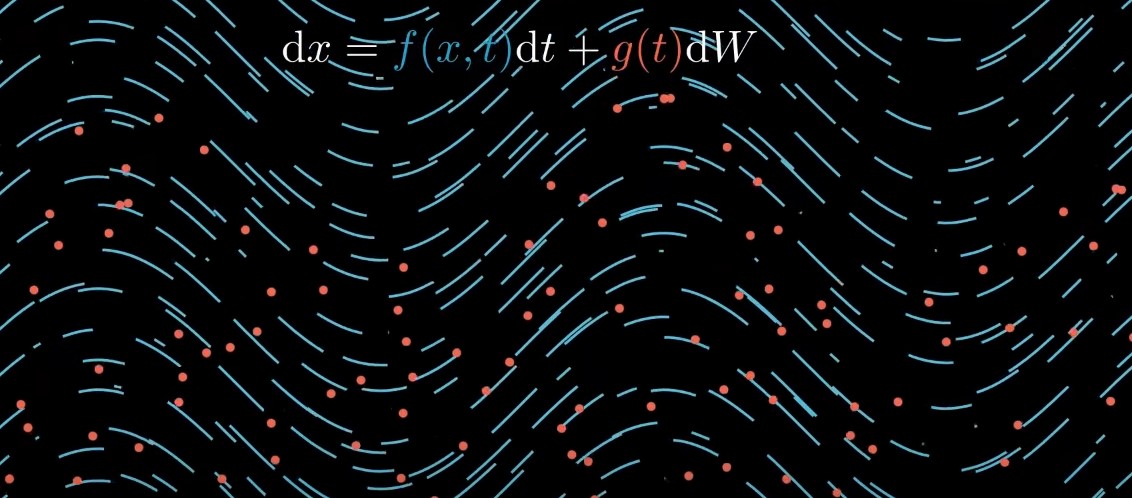
1)可微表现在:it relates variable x to its change over time t
2) 随机表现在:第二项是一个布朗运动,which is random。
现在来看DDPM对应的drift和diffusion cofficients的具体形式是什么。
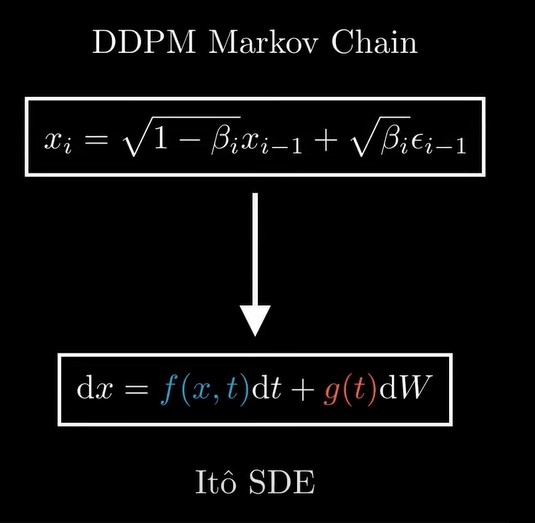
推导过程省略,最后的结果如下图所示
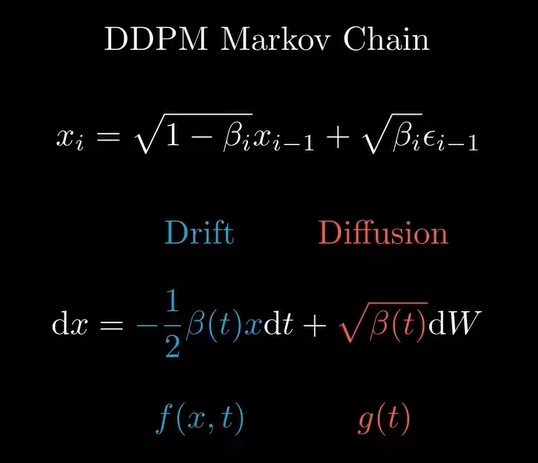
其中,dW = 
这个式子的物理意义是,第一项drift term 的作用是 pulls datapoints to the origin,第二项diffusion term的作用是spreads them out, preventing datapoints from collapsing to a single point.这和我们DDPM中的前向过程是一样的:将任意图片变成完全噪声图片(将任一原始分布变成高斯分布)。
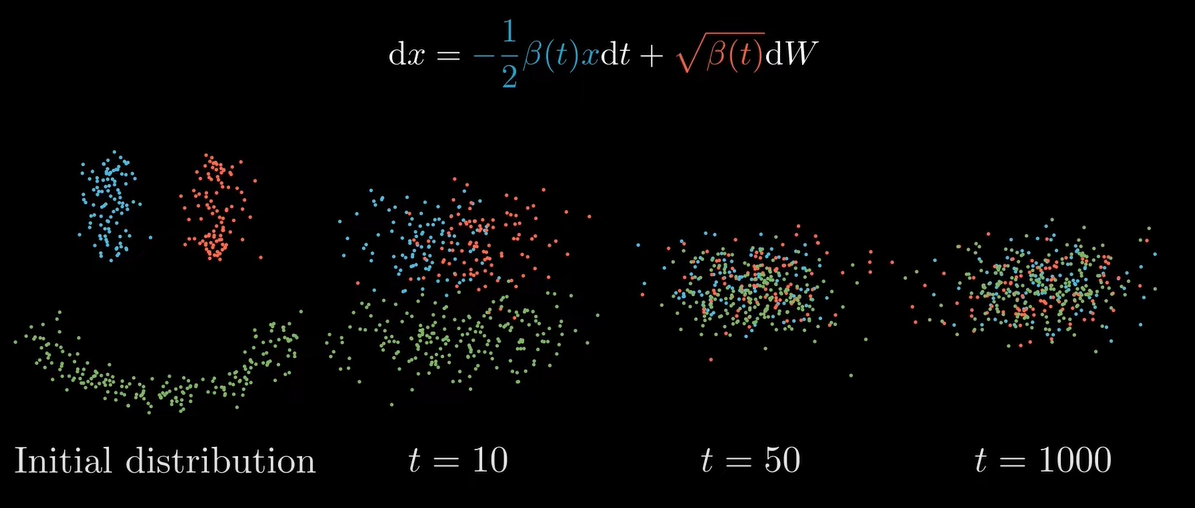
那么,如果我们可以reverse 这个SDE方程,我们就能从噪声图像中恢复原始图像了。上世纪80年代的工作告诉我们,under mild conditions, any forward SDE has a corresponding reverse SDE。
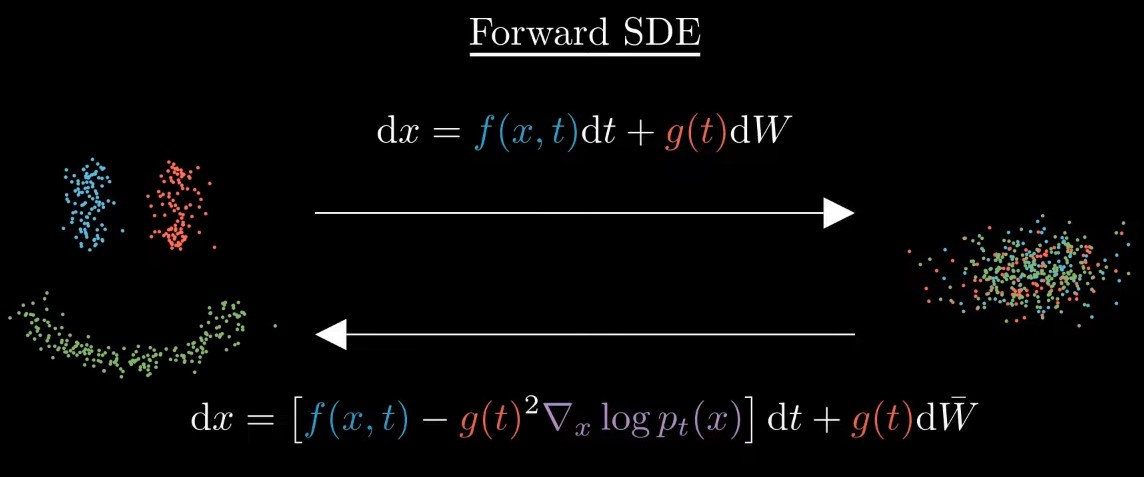
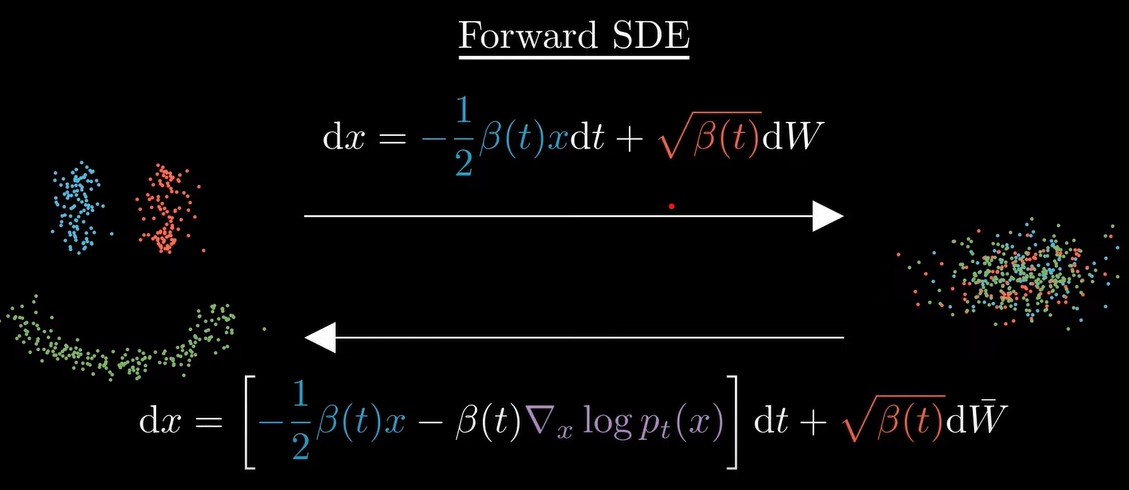
在上图的式子中,我们唯一不知道的是紫色那一项,,即得分函数score functions,什么是score funcitons呢?
假设有一个分布,样本集中分布在紫色区域,这个分布的score function is a function that assigns to every point in space a
vector pointing toward regions of higher porbability. In other words, it tells us which direction the density increases
fastest. 可以把score function比作为一个罗盘,总是指向高密度区域。
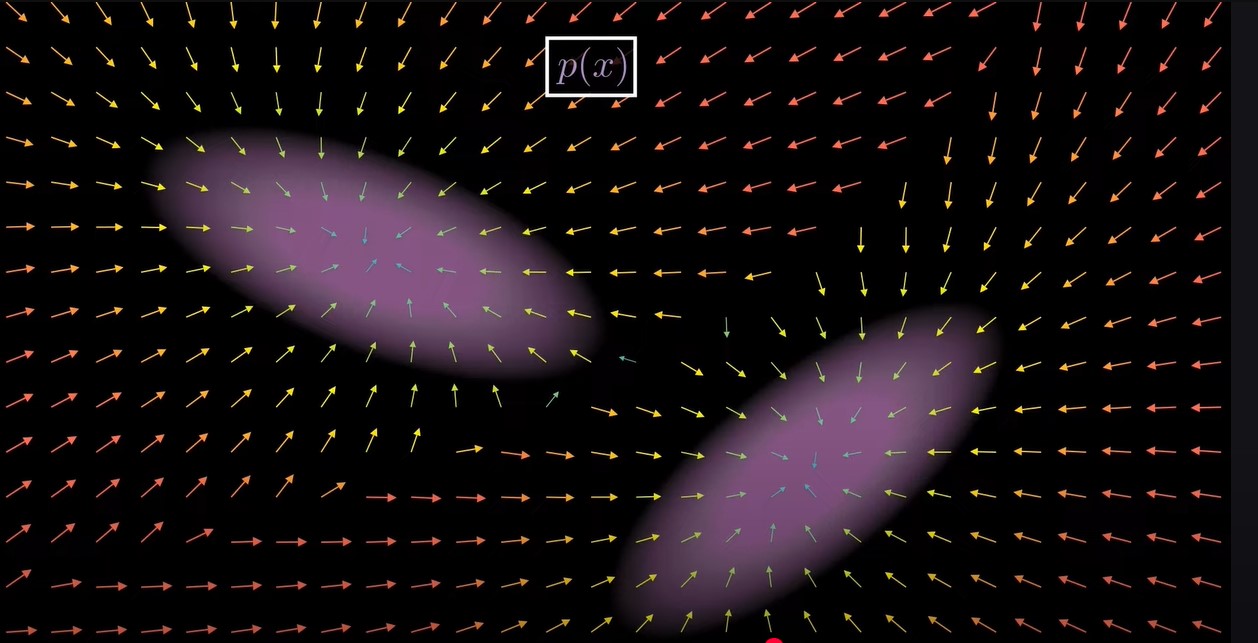
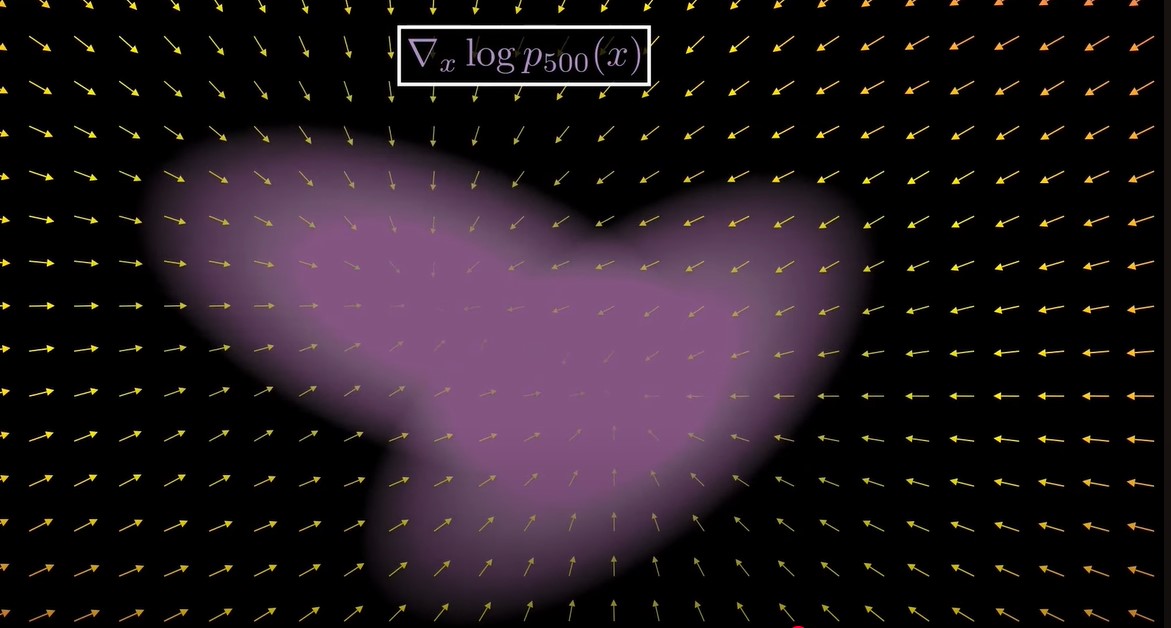
在diffusion刚开始的阶段,由于原始分布没有经过太多的扰动,分布是很clean的,此时score funtion也是sharp的,如上图所示。而随着diffusion的进行(加入越来越多的noise),分布越来越像高斯分布,score funtion也变得smooth了,如下图所示。
我们需要得到每一步的score function才能reverse SDE,我们用神经网络来学习。神经网络通常是Unet,输入是xt,和t,输出是此时的score funtion。
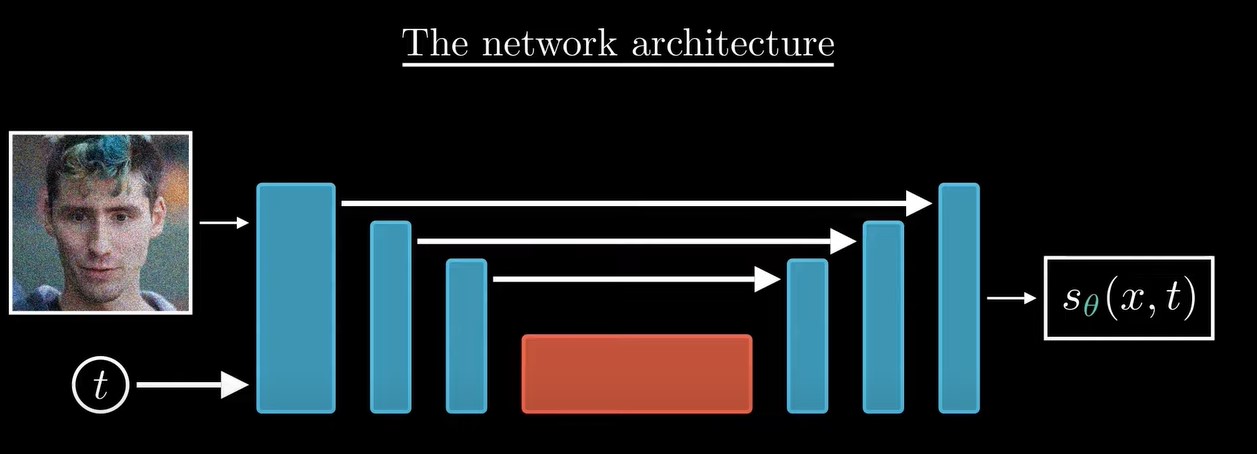
训练的目标就是,我们想让Unet输出的score function和真实的score function越接近越好:
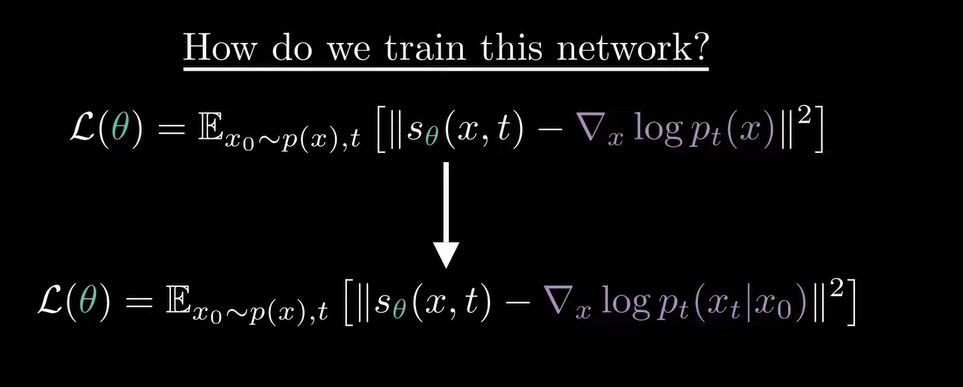
其中,,具体推导省略。
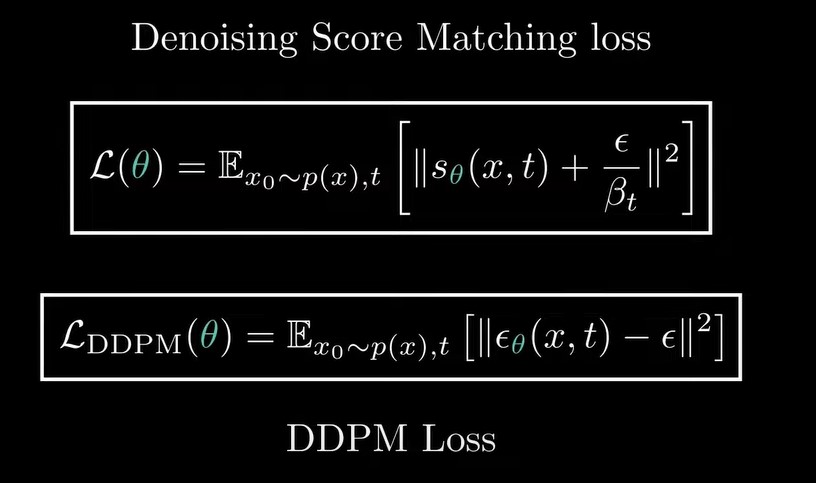
从上图中看出,DDPM和score match 这两种方法的loss是不同的,因为DDPM是预测每一步的噪声,score match预测的是每一步的score Function。但是这两种方法都可以用来生成新的样本。
最后,有了score function之后 ,也就有了reverse SDE方程,但是reverse SDE方程是连续的形式,我们需要对其进行离散化来生成新图片,离散化有很多方法,是一个被广泛研究的领域,最常用的是Euler-Maruyama离散化,
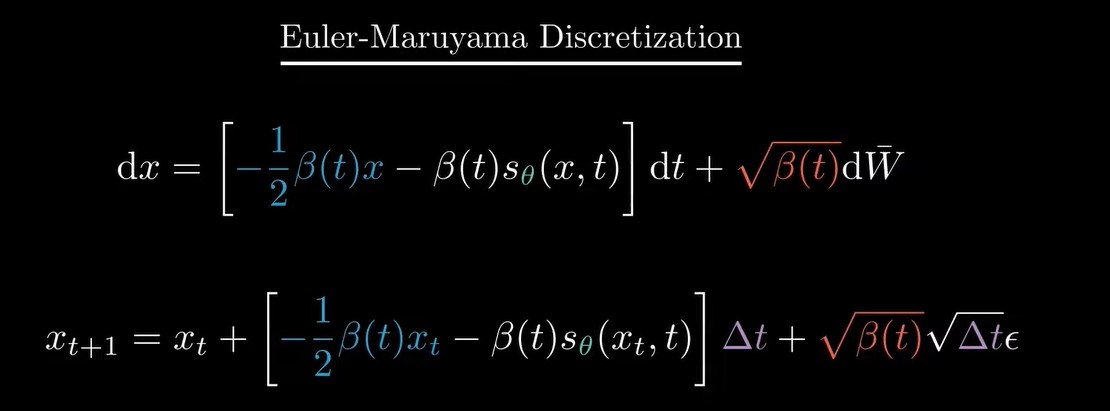
总结下DDPM和score match 这两种方法的不同
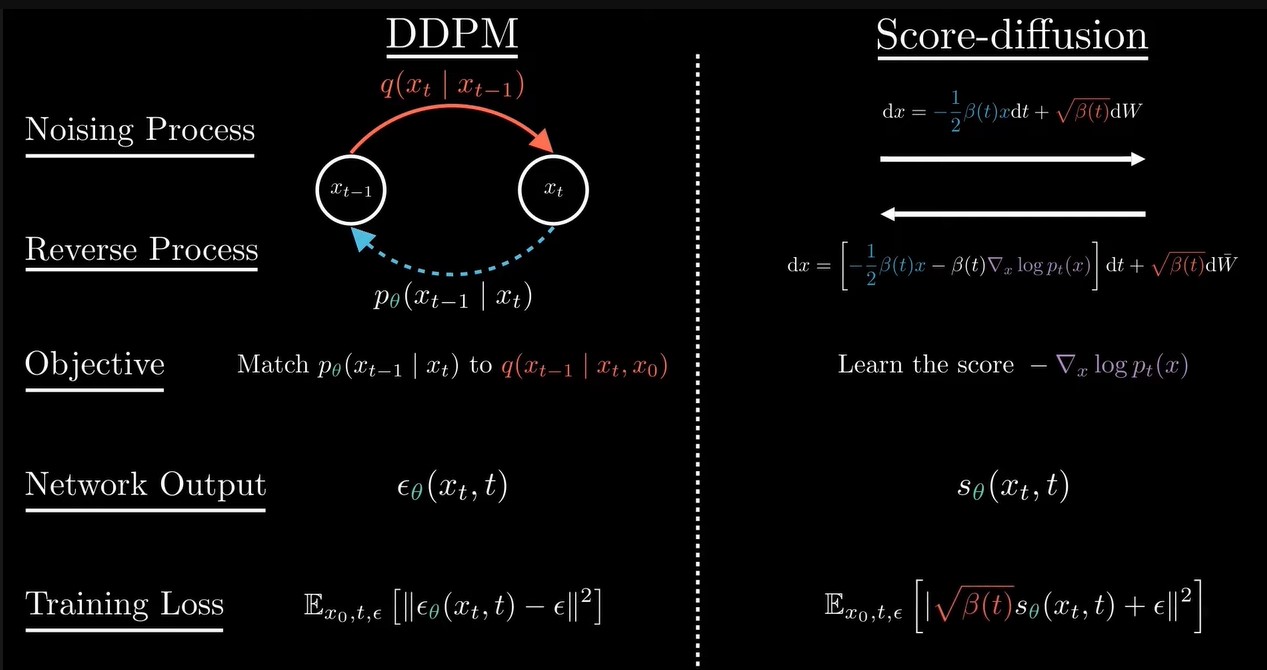
score based diffusion更general,可以选择不同的SDE方程,也可以用其他的离散化方法。